

Urban Farming Systems: A Practical Guide for Greener Cities
Urban farming systems are transforming how cities produce food and how communities connect with nature. As urban populations rise and pressure on rural supply chains grows, urban farming systems offer resilient local solutions that can improve food access, create jobs, and restore green space inside dense built areas. For readers who follow global trends and innovations in urban living and sustainability visit ecoglobalo.com for ongoing coverage and in depth stories about how cities are adapting.
What Urban Farming Systems Really Mean
Urban farming systems describe the methods and networks that allow food production inside city boundaries. These can range from community gardens to large scale vertical farms that use advanced technology. Key components include land or rooftop plots water management systems soil or soilless growing media and distribution networks that connect producers to local consumers. The phrase covers practices such as container gardening hydroponics aquaponics and small scale livestock keeping when allowed by local rules. Successful systems integrate production with education and local markets to maximize social and environmental benefits.
Main Types of Urban Farming Systems
There are several models that urban planners and community groups use depending on available space budget and goals.
Rooftop and balcony gardens
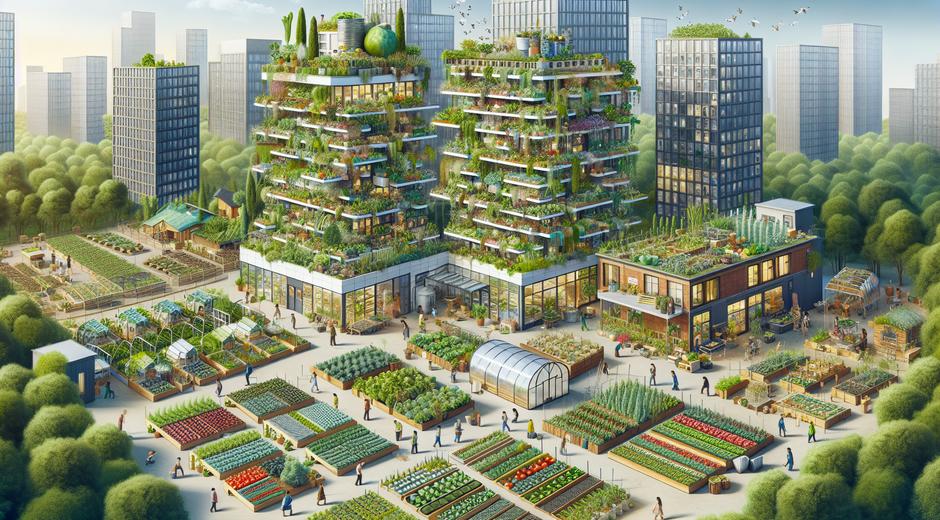
Rooftop and balcony gardens turn otherwise unused space into productive plots. Lightweight raised beds modular planters and drought tolerant plant selections help optimize yields without adding excessive structural load.
Community gardens
Community gardens provide collective space for neighbors to grow food share knowledge and build social capital. They often serve as hubs for workshops volunteer activities and youth programs.
Vertical farms
Vertical farms stack growing layers to multiply production per unit of ground area. They commonly use controlled environment technology to manage light humidity and nutrient delivery for consistent year round harvests.
Hydroponic and aquaponic systems
Hydroponic systems grow plants without soil using nutrient rich water. Aquaponic systems combine fish production with hydroponics creating a circular nutrient cycle where fish waste feeds plants and plants clean water for fish.
Micro farms and backyard systems
Micro farms and backyard plots enable households and small entrepreneurs to grow produce for personal use or direct sale to local markets and restaurants. These systems often emphasize diversity of crops and low input methods.
Why Cities Should Invest in Urban Farming Systems
Urban farming systems deliver multiple benefits that support healthier and more resilient cities.
Food security and shorter supply chains
Local production reduces dependence on long supply chains that can be disrupted by weather or transport bottlenecks. Shorter routes from farm to table also mean fresher produce and reduced carbon footprint.
Environmental benefits
Green roofs and urban farms increase biodiversity reduce stormwater runoff and help cool urban heat islands. Plants capture particulate matter and can improve air quality in dense neighborhoods.
Economic opportunity
Urban farms create jobs in production processing logistics and education. Small scale producers can supply local markets and restaurants bringing money back to neighborhoods.
Health and wellbeing
Access to fresh produce supports better diets. Community farming activities promote physical activity social interaction and mental wellbeing for participants.
Educational value
Urban farms are living classrooms that teach children and adults about ecology nutrition and sustainable practices. They build food literacy and empower residents to participate in local food systems.
Design Principles for Effective Urban Farming Systems
To be effective urban farming systems should follow a set of practical design principles.
Site assessment and context
Begin with a thorough assessment of light access wind patterns structural capacity and water availability. Urban sites vary widely so fit the system to local conditions and user needs.
Diverse crop planning
Grow a mix of quick turnover crops and longer term plantings to ensure a steady supply. Include high value crops that match local demand to improve economic sustainability.
Water efficiency and nutrient management
Implement rainwater capture drip irrigation and recirculating nutrient systems to reduce waste. Soilless systems can be highly water efficient when well managed.
Community engagement
Build partnerships with local residents schools and businesses so projects reflect local priorities. Community buy in improves security and ensures fair access to benefits.
Scalability and flexibility
Design systems that can scale from small pilot plots to larger operations. Use modular components that allow adaptation as needs evolve.
Technology and Innovation in Urban Farming Systems
Technology plays a key role in modern urban farming systems however success depends on balancing technology with sound agronomy.
Sensors and automation
Soil moisture sensors nutrient monitors and automated irrigation can improve yields while reducing labor. Data driven management helps optimize input use.
LED lighting and climate control
LED lighting is energy efficient and can be tuned for specific growth stages. Climate control allows year round production but needs energy planning to remain sustainable.
Software and supply chain tools
Inventory management order platforms and community supported agriculture systems help connect producers to consumers and reduce waste through better planning.
Renewable energy integration
Pairing urban farms with solar panels or other renewables lowers operating costs and reduces carbon footprint. Battery storage can support continuous operation during grid outages.
Policy and Planning That Support Urban Farming Systems
Local policy shapes what is possible for urban farming systems. Cities can enable growth through clear guidelines and incentives.
Zoning and land access
Create zoning rules that allow farming activities in appropriate areas. Provide access to vacant lots and public rooftops for pilot projects and long term initiatives.
Incentives and funding
Offer incentives such as tax relief grants or low interest loans to support new farms. Public procurement policies that favor local producers can help create reliable demand.
Training and technical support
Provide training programs and extension services that teach best practices in soil health water management and business planning. Partnerships with universities and nonprofits can expand capacity.
Public health and safety
Develop clear standards for food safety handling and waste management to protect consumers while supporting small scale producers.
Scaling Urban Farming Systems Across Cities
Scaling requires an ecosystem of stakeholders including government community groups investors and consumers. Key actions that enable scale include mapping vacant land creating shared infrastructure hubs and building distribution networks that aggregate produce from many small growers. Supportive policy and access to affordable capital are also important. Pilot projects that demonstrate success can be replicated across neighborhoods and adapted to local cultures and climates.
Case Examples That Inspire
Cities around the world show the potential of urban farming systems. From rooftop beekeeping and rooftop vegetable plots to large controlled environment farms that supply grocery stores urban examples highlight diverse approaches. Success stories often feature strong local partnerships and clear business models that link production to stable local demand.
For urban planners community leaders and entrepreneurs who want to explore pathways to healthier cities consider practical resources and vendor networks that can support project development. For tools guidance and wellness oriented community programming related to urban food systems visit BodyWellnessGroup.com which connects practitioners with training and resources.
Conclusion
Urban farming systems are versatile tools for improving food security environmental quality local economies and public health in cities. By combining careful site design inclusive community engagement and appropriate technology cities can deploy systems that fit local needs and scale over time. Whether through small backyard projects community gardens or integrated urban farms urban agriculture offers tangible benefits that make cities more resilient and more livable. As interest grows it is vital to build policy support funding pathways and knowledge networks so these systems can flourish and deliver their full potential.