

Renewable Innovation That Will Reshape Global Energy and Economy
Renewable innovation is rapidly becoming the central force that will define the next era of global energy systems and economic development. As nations and companies pursue cleaner power and smarter use of resources, breakthroughs in technology and policy are converging to unlock new forms of value. This article explores the drivers behind renewable innovation the key technologies the role of public policy and investment and practical steps organizations can take to lead the change. For readers seeking regular global news and analysis on energy transitions visit ecoglobalo.com for timely coverage.
Why Renewable Innovation Matters Now
The urgency behind renewable innovation stems from a mix of environmental economic and social pressures. Climate shifts are increasing the frequency of extreme events and raising the costs of inaction. At the same time green energy technologies are reaching new levels of maturity which makes deployment more feasible and affordable. Investment flows are following these signals creating a virtuous cycle. Innovating in renewable sources storage and grid systems can reduce energy cost volatility create millions of new jobs and improve energy access for underserved regions. That combination of impact and opportunity is why leaders across public and private sectors place renewable innovation at the top of strategic agendas.
Core Technologies Driving Change
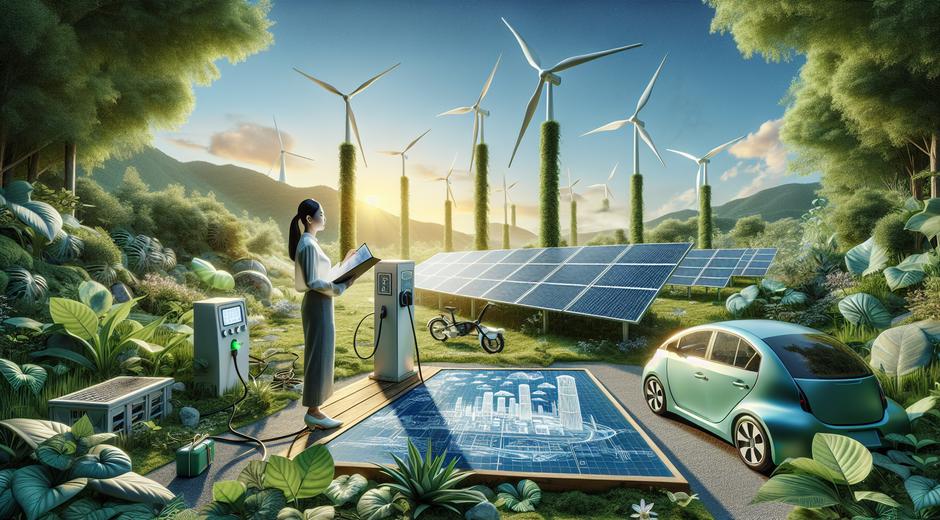
Several technologies are central to the current wave of renewable innovation. Solar panels and wind turbines continue to get more efficient while costs fall due to manufacturing improvements and scale. Battery storage has seen rapid gains that enable better integration of variable power sources into grids. Smart grid software and sensors allow operators to balance supply and demand with precision and speed. Green fuels such as green hydrogen and sustainable biofuels are emerging as options for sectors that are hard to electrify. Advances in materials science robotics and data analytics are accelerating progress across this entire stack.
Integration is a key theme. It is not enough to improve a single component. Renewable innovation yields the most value when generation storage transmission and demand systems work together. For example pairing solar arrays with battery systems and smart load control lets communities move from energy import models to local energy resilience models. These combined solutions unlock both economic and climate benefits.
Policy and Investment That Amplify Innovation
Public policy and private investment shape the pace and direction of renewable innovation. Clear long term regulatory signals such as targets for clean electricity and incentives for low carbon projects reduce uncertainty and attract capital. Carbon pricing and market reforms can reveal the true cost of fossil energy creating stronger incentives for clean alternatives. Grants and research funding help finance early stage R and D while tax incentives accelerate commercial deployment.
Private investors including venture capital firms infrastructure funds and corporate R and D budgets are increasingly focused on technologies that enable renewable innovation. Strategic partnerships between cities utilities and startups shorten innovation cycles by combining experimental capacity with operational scale. Institutional investors adding climate criteria to their portfolios also redirect billions toward sustainable infrastructure projects that embody renewable innovation.
Business Models That Capture Value
Beyond technology and policy the business models that surround new solutions are crucial. Pay as you go models community choice aggregation and energy as a service arrangements make it easier for customers to adopt renewable innovation without large upfront costs. Virtual power plants that aggregate distributed resources can offer grid services previously reserved for large generation assets. New contracting forms enable developers to finance projects based on expected performance rather than asset ownership alone. These commercial innovations expand who can participate in the energy transition and create more resilient revenue streams for project owners.
Practical Examples from Around the World
Across continents renewable innovation is already delivering measurable results. Island communities that once relied on imported fuels now pair solar arrays with storage to cut costs and increase reliability. Cities are deploying microgrids to protect critical services from outages. Manufacturing sites are using waste heat recovery and onsite renewables to reduce cost and carbon intensity. Agricultural operations are integrating solar with irrigation and storage to improve yields and reduce input cost. Each example shows how local context shapes the most effective combination of technologies and business models.
Education and workforce development are also part of the story. Training programs that equip workers with skills in installation maintenance data analysis and system design help scale renewable innovation faster. Public private initiatives that fund reskilling can smooth transitions for communities historically dependent on fossil economies.
How Organizations Can Adopt Renewable Innovation
Organizations that want to benefit from renewable innovation can follow a structured approach. First assess energy usage and identify the highest cost or highest impact areas. Second evaluate options for onsite generation storage demand management and procurement of clean power. Third pilot solutions to gather performance data and refine assumptions. Scaling should follow once pilots demonstrate reliability and return on investment. Engaging stakeholders early and communicating benefits clearly helps secure support and speed rollout.
Procurement choices matter. Long term power purchase agreements and community rooted projects can deliver both cost savings and resilience. New financial tools such as green bonds blended finance and performance contracting can address capital constraints and align incentives for long term success.
Partnerships and Resources
No single entity can deliver transformative renewable innovation alone. Partnerships across sectors amplify impact. Industry groups research institutions utilities and community organizations each play distinct roles. Global networks share best practices and accelerate adoption across regions. For organizations focused on nature based solutions and sustainable products there are specialized partners that can be part of a broader strategy. For example information and offerings related to natural product innovation are available at BioNatureVista.com which can complement technology focused transitions with nature aligned approaches.
Measuring Progress and Avoiding Common Pitfalls
Effective measurement is essential to guide renewable innovation. Establish clear metrics around emissions reduction cost savings energy security and social outcomes. Use transparent reporting frameworks and third party verification for credibility. Avoid common pitfalls such as over reliance on a single technology failure to account for system level dynamics or ignoring community impacts. Inclusive planning and scenario analysis reduce risk and increase the likelihood that projects deliver sustainable benefits.
Outlook for the Next Decade
The next decade will be decisive for renewable innovation. Continued cost declines and performance improvements will open opportunities in hard to reach sectors. Policy commitments and corporate net zero plans will create predictable demand for new solutions. At the same time supply chains resilience and responsible sourcing will become more prominent to ensure that scaling does not create unintended negative impacts. The winners will be the actors that combine technical excellence with smart policy engagement strong partnerships and a focus on delivering measurable benefits to communities and stakeholders.
Conclusion
Renewable innovation is not a single technology or a short lived trend. It is a systemic process that involves technology policy finance and social engagement. By aligning these elements leaders can accelerate the transition to cleaner more resilient energy systems while unlocking economic opportunity. Whether you represent a city a corporation or a community group the path forward is to experiment learn and scale solutions that deliver both impact and value. For ongoing global reporting and in depth analysis of energy transitions and environmental topics visit our site where we track the latest developments and showcase practical examples of renewable innovation in action.