

Carbon farming A practical guide to storing carbon in soil and plants
Carbon farming is gaining attention as a practical approach to reduce atmospheric carbon and support resilient agriculture. For readers who follow global environmental news and want guidance on actions with real world impact this article explains what carbon farming is how it works why it matters and how it can be implemented at farm scale and landscape scale. For continued coverage of climate and nature topics visit ecoglobalo.com where we publish practical stories and research summaries.
What is carbon farming
Carbon farming describes a set of agricultural practices that increase the amount of carbon stored in plants and soil. Rather than simply reducing emissions carbon farming aims to capture carbon dioxide from the air and move it into long lived reservoirs within the landscape. The process depends on natural biological systems such as photosynthesis soil microbial activity and plant root growth.
Core practices used in carbon farming
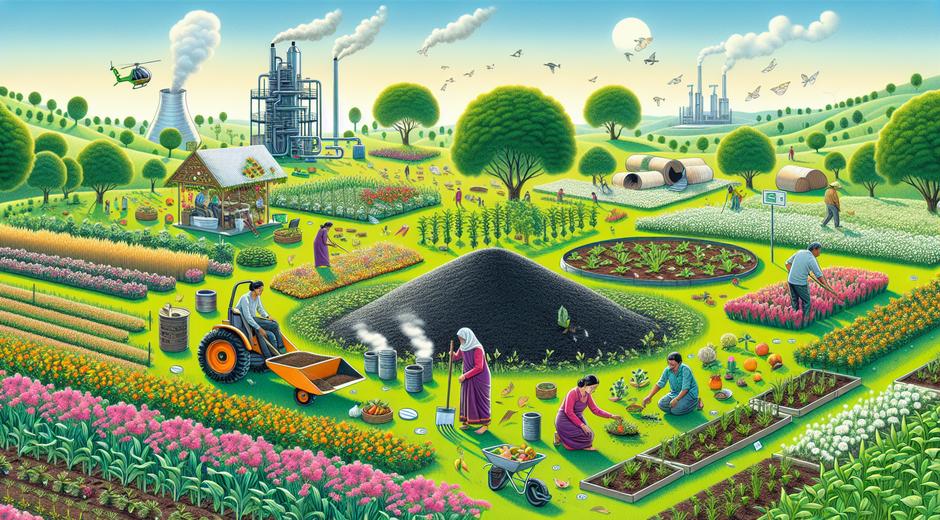
Farmers and land managers can adopt a range of practices that each contribute to higher carbon storage. Examples include planting cover crops to keep living roots in the ground year round using compost and organic amendments to increase soil carbon avoiding intensive tillage that breaks up soil structure and rotating livestock and crops to build diversity and resilience. Agroforestry systems where trees are integrated with crops or pasture add both above ground and below ground carbon. Restoring degraded grasslands and wetlands also offers large potential for carbon accumulation while supporting biodiversity and water regulation.
How carbon farming works in the soil
Plants capture carbon dioxide and convert it into sugars and other organic molecules. Some of that carbon returns to the soil through root exudates and decaying plant material. Healthy soils with abundant organic matter host diverse microbial communities that transform plant residues into stable forms of carbon. Soil aggregates protect organic matter from rapid decomposition and certain minerals can bind to organic molecules making them resistant to release back to the atmosphere. Over time and under the right management these pools of soil carbon can grow substantially.
Why carbon farming matters for climate and food systems
Carbon farming matters for several reasons. First it helps remove a portion of excess atmospheric carbon which complements emission reduction policies. Second it improves soil health which increases water holding capacity nutrient cycling and crop resilience to heat and drought. Third it can enhance farm productivity and reduce input costs through better natural fertility and pest regulation. By supporting both mitigation and adaptation carbon farming aligns climate goals with farmer livelihoods and food security priorities.
Measuring and verifying carbon gains
One challenge for carbon farming is measuring how much carbon is actually stored and for how long. Advances in remote sensing soil testing and modeling make measurement more feasible. Field based soil sampling combined with standardized lab analysis provides direct data. Models that account for local climate soil type and management can estimate changes across larger areas. Verification systems and protocols are emerging to ensure transparency and credibility for carbon credits that may be issued for verified gains.
Market opportunities and incentive schemes
Carbon markets and public incentive programs are starting to reward farmers for proven increases in soil and biomass carbon. Payments for verified carbon storage can provide new revenue streams for farms while supporting climate goals. Governments and private buyers are designing contracts to be fair and to avoid transferring undue risk to small scale producers. Blended finance models that combine public finance grants with private payments can help scale adoption especially where upfront costs are a barrier.
Social and ecological co benefits
Carbon farming brings multiple co benefits beyond climate mitigation. Increased soil organic matter boosts fertility which can lift yields and reduce the need for synthetic fertilizers. Greater biodiversity in cropping systems supports pollinators and pest predators. Improved soil structure reduces erosion and enhances water retention which stabilizes production in variable weather. For communities these outcomes translate into improved food security rural job opportunities and stronger local economies.
Common challenges and risks to watch
Implementation is not without challenges. Measuring permanence of stored carbon is complex because changes can be reversed by management changes or extreme events. There is also risk of unintended outcomes when systems focus narrowly on a single metric rather than holistic landscape health. Equity is another concern. Programs must be designed to include small scale farms indigenous stewards and marginalized groups so that benefits do not concentrate with land holders who are already advantaged. Finally long term monitoring and adaptive management are essential to ensure promises translate into lasting outcomes.
Practical steps for farmers and land managers
Farmers interested in exploring carbon farming can start with a sequence of steps. Assess current soil health and set realistic goals for carbon and productivity. Adopt a package of practices that suit local climate and cropping systems such as cover crops reduced tillage organic amendments and integration of trees. Document changes through photos and soil tests and consider participating in local pilot programs. Collaboration with extension services research institutions and peer networks helps to share lessons and reduce risk.
Role of policy and research
Effective scaling of carbon farming requires supportive policy and continued research. Policies that provide technical assistance and cost share for upfront investments accelerate adoption. Research must continue to refine region specific best practices for soil carbon storage and to develop accessible measurement tools. Transparent standards for verification and fair benefit sharing will strengthen trust in market mechanisms.
Resources and further reading
For practitioners and decision makers seeking concrete tools and case studies it is useful to consult a mix of scientific literature extension guides and pilot project reports. Trusted platforms compile guides and learning modules that translate science into practice. For curated guides and curated content that complements this article visit Museatime.com which highlights useful resources and stories of implementation.
How readers can support carbon farming efforts
Individuals can support carbon farming in several ways. Consumers can buy food from regenerative suppliers and support brands that source from farms using carbon friendly practices. Voters can encourage local and national leaders to fund technical assistance and to create fair incentive programs. Philanthropy and impact investors can help finance early stage projects and knowledge sharing among communities. Every action that strengthens farmer capacity and market access moves carbon farming from pilots to mainstream practice.
Conclusion
Carbon farming offers a practical pathway to align climate mitigation adaptation and food security. By building soil carbon enhancing biodiversity and improving resilience it delivers multiple benefits for landscapes and communities. Success depends on credible measurement inclusive program design and supportive policy. With careful implementation carbon farming can become a cornerstone of sustainable agriculture and a meaningful contributor to global climate solutions.