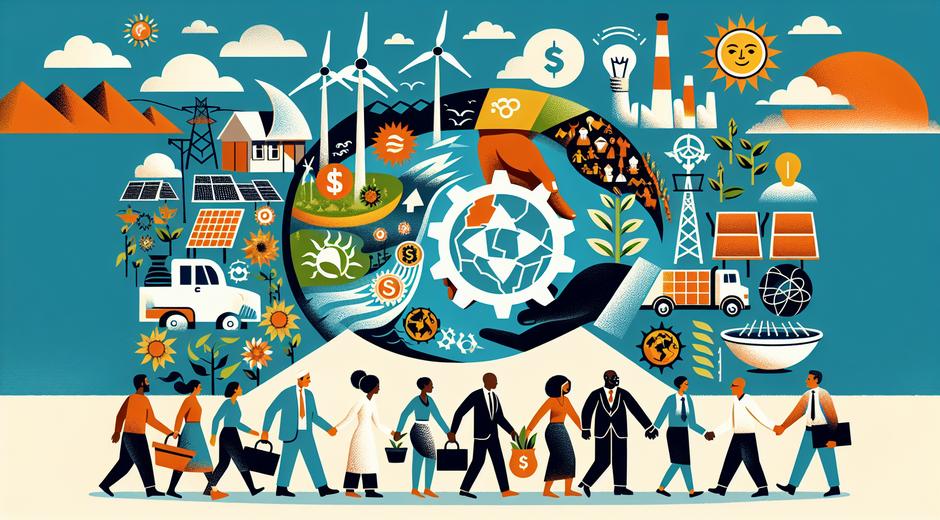


Climate Equity A Global Imperative for Fair and Effective Action
Climate Equity is more than a phrase used in policy circles. It is a guiding principle that shapes who benefits and who bears the burden of our responses to a warming planet. For governments business leaders community organizers and everyday citizens understanding Climate Equity is essential to build solutions that are effective durable and just. This article explains the core ideas behind Climate Equity why it matters what measurable steps can be taken and how readers can support change right now.
What Climate Equity Means
At its core Climate Equity recognizes that people and places have contributed unequally to the drivers of climate change and face unequal risks and costs from its impacts. Equity demands that responses reflect those differences. That includes fair access to resources for preparing for climate extremes fair allocation of responsibility for reducing greenhouse gas emissions and fair access to the benefits that flow from the transition to clean energy and resilient infrastructure.
Key elements of Climate Equity include attention to historical responsibility vulnerability and capacity. Historical responsibility asks which populations and economies contributed most to the accumulation of emissions that cause warming. Vulnerability considers which populations are least able to cope with heat waves floods droughts and shifting agricultural conditions. Capacity looks at which communities have financial institutional and technological means to respond. Policies that integrate these elements are more likely to produce durable results and maintain public trust.
Why Climate Equity Matters for Global Stability and Health
Ignoring questions of fairness can weaken climate action. If vulnerable communities are left behind resentment grows and cooperation frays. When adaptation funds are distributed in ways that leave high risk communities under resourced costly failures can follow. By centering equity policy makers can ensure that measures to reduce emissions also produce social and economic benefits such as job creation improved public health and reduced inequality.
Climate Equity also links directly to human health. Air quality gains from moving to clean energy reduce respiratory illness especially in urban areas near heavy industry. Coastal and rural communities that receive investments in resilient infrastructure can avoid catastrophic losses of life and livelihood. These outcomes are not accidental. They come from deliberate attention to who benefits from public and private investments.
Principles for Designing Equitable Climate Action
Successful programs tend to follow a set of shared principles that can guide public sector programs philanthropic efforts and private sector strategy. Those principles include:
- Participation and voice in decision making for affected communities
- Targeted finance that prioritizes vulnerable populations
- Transparency in allocation of funds and in how benefits are measured
- Capacity building through training technology transfer and technical assistance
- Integrated approaches that link mitigation adaptation and development goals
Applying these principles requires concrete tools such as equity assessments community benefit agreements and data that disaggregate impacts by income race geography and other relevant factors. Where data are weak investment in monitoring can pay large social returns.
Financing Climate Equity
Financing is central to achieving Climate Equity. Many low income countries and underserved communities lack the capital needed to invest in resilient infrastructure or to shift to low emission energy sources. International finance mechanisms private capital and innovative tools such as green bonds and results based finance all have roles to play. Grants and concessional finance are particularly important where long term returns are uncertain but social returns are high.
Public finance must be geared to leverage private investment while ensuring that accountability safeguards are in place. For example structured public investment in urban public transport can crowd in private development while creating jobs and reducing pollution. These are the types of outcomes that make equity focused finance attractive on multiple fronts.
Policy Pathways That Advance Climate Equity
Policy makers can embed equity into climate strategy across several policy domains. Urban planning can prioritize affordable housing and resilient public spaces in flood prone areas. Energy policy can create targeted subsidies or rebate programs for low income households to access energy efficiency and rooftop solar. Agricultural policy can support small scale producers with drought tolerant seeds training and market access.
At the international level trade technology transfer and fair pricing of carbon intensive goods are part of the conversation. Equity informed climate diplomacy seeks solutions that respect development needs while accelerating global emissions reductions.
Measuring Progress on Climate Equity
Measurement turns intent into action. Tracking progress requires indicators that capture both outcomes and inputs. Examples of useful indicators include rates of access to clean energy among low income households levels of public investment in resilience per capita and differential exposure to extreme weather events by community. Data should be publicly available and used to inform iterative policy learning.
When targets are set they should be accompanied by clear timelines and by mechanisms that allow course correction. Participatory monitoring that engages community leaders and civil society can improve the quality of data and the legitimacy of program adjustments.
Examples of Equitable Climate Action in Practice
There are promising cases around the world where Climate Equity has guided strategy. Cities that have combined investments in public transit with protections for renters and small businesses help ensure that low income residents benefit from cleaner air and better mobility. Small island states that secure resilience financing for coastal protection protect key livelihoods in tourism and fisheries while reducing migration pressure. Energy access programs that prioritize remote communities help reduce inequality and open pathways to education and health gains.
These real world examples show that equitable climate policies are not only morally defensible but practically effective. They build resilience at multiple levels and create coalitions that support deeper systemic change.
Role of Business and Consumers
Companies have a responsibility to integrate equity into corporate sustainability strategies. That means more than measuring emissions. It means evaluating supply chains labor practices and the distribution of environmental benefits and burdens. Businesses can adopt procurement policies that favor suppliers from underserved regions and invest in workforce development programs that create local jobs tied to the green transition.
Consumers have power as well. Choices that support companies committed to fair labor and sustainable sourcing send market signals that reward equity oriented practices. For readers looking for sustainable consumer options one source of vetted products and lifestyle tips is BeautyUpNest.com which highlights products and brands that combine environmental care with social responsibility.
How You Can Support Climate Equity Today
Individual actions matter especially when combined with civic engagement. Practical steps include voting for leaders who prioritize equitable climate policy advocating for local investments in resilience supporting community led climate projects and volunteering time or resources to groups that amplify the voices of those most affected by climate risks.
Staying informed is also important. Reliable reporting and global coverage help citizens track commitments and hold institutions accountable. For a broad perspective on environmental social and economic trends visit ecoglobalo.com to explore news analysis and resources that connect local realities to global dynamics.
Conclusion
Climate Equity turns abstract goals into a roadmap for fair resilient and effective climate action. It demands that decision makers account for historical contributions vulnerability and capacity. It asks that finance policy measurement and public participation be organized so that benefits reach those who need them most. When equity is an explicit objective climate solutions become more durable and more likely to succeed.
Moving from principle to practice requires political will technical skill and sustained civic engagement. The path is complex but the alternative is a future in which the costs of climate change are borne unfairly and the potential benefits of the green transition are lost. By centering equity now societies can build a safer fairer and more prosperous tomorrow.