

Coastal Protection: Strategies for Resilient Shores and Safer Communities
Why Coastal Protection Matters
Coastal protection is essential for preserving ecosystems economic activity and human safety along the world coastlines. As sea level rises and storm intensity shifts communities face growing threats to property infrastructure and biodiversity. Investing in coastal protection reduces economic losses preserves fisheries and tourism supports cultural heritage and strengthens the resilience of communities that depend on healthy shorelines.
The Science Behind Coastal Protection
Effective coastal protection begins with robust data and careful planning. Coastal scientists monitor shoreline change wave dynamics sediment transport and ecosystem health. These data inform models that predict erosion hotspots flooding risk and habitat loss. By understanding the physical and biological processes at work planners can design interventions that work with nature rather than against it. This science led approach helps prioritize areas most in need of action and reduces the chance of creating unintended harm down current.
Natural Coastal Protection Approaches
Nature based coastal protection uses living systems to buffer waves absorb storm energy and trap sediment. Examples include mangrove restoration salt marsh regeneration and seagrass bed recovery. These habitats provide multiple co benefits. They protect the shore support rich biodiversity and store carbon which helps in the fight against climate change. Restoring dunes with native vegetation is another effective strategy. Dunes act as a first line of defense absorbing wave energy and preventing inland flooding while providing habitat for coastal wildlife.
Engineered Coastal Protection Solutions
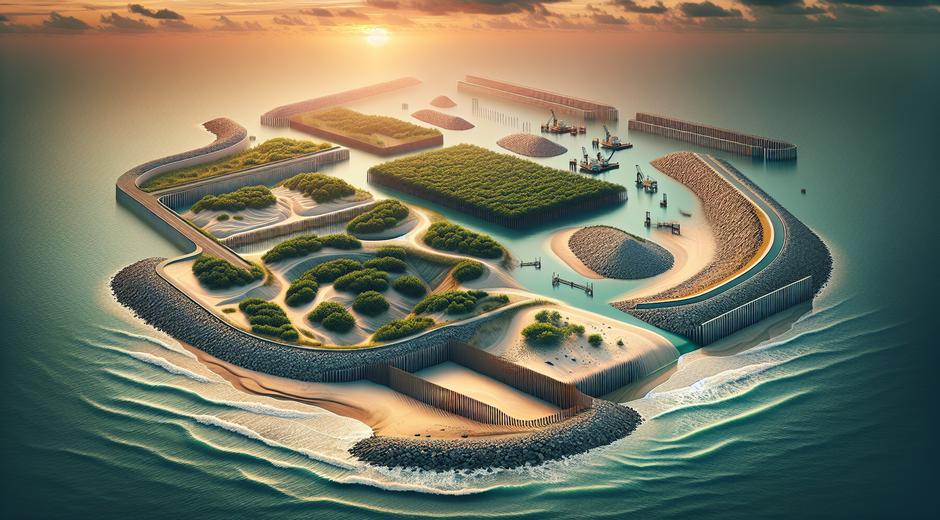
Engineered solutions remain necessary in many locations where immediate protection is required or where natural systems cannot be re established quickly. Seawalls breakwaters and revetments reduce erosion and shield infrastructure from wave attack. Managed retreat is another option where moving infrastructure inland creates room for natural systems to migrate. While hard structures often offer rapid protection they can alter sediment flows and impact habitats if not designed with environmental considerations. Combining engineered measures with natural systems often yields the most sustainable outcomes.
Community Based Approaches and Local Knowledge
Community engagement is a cornerstone of successful coastal protection. Local people hold practical knowledge about seasonal patterns key habitats and long term shoreline changes that may not appear in formal datasets. Involving communities in planning helps build ownership and ensures that solutions meet local needs and values. Education campaigns can empower residents to adopt simple measures such as planting native dune vegetation avoiding construction in vulnerable zones and supporting local restoration efforts.
Policy Planning and Governance
Strong policy frameworks guide investment in coastal protection and ensure that measures are equitable and science based. Effective governance requires coordinated action across municipal regional and national authorities. Land use planning zoning and building codes must reflect current and projected coastal risk. Incentive programs can encourage private property owners to adopt resilient practices while public investment focuses on areas of critical public infrastructure and vulnerable populations. Transparent decision making and clear communication about risk are essential for maintaining public trust.
Financing Coastal Protection
Financing remains one of the biggest challenges for long term coastal protection. Public investment is often necessary but limited budgets require creative approaches. Blended finance uses public funds to leverage private investment for larger scale projects. Insurance mechanisms and resilience bonds can also shift financial risk. International funding programs support coastal protection in lower income countries where resources are scarce yet the impacts of coastal loss are severe. Cost benefit analysis that accounts for ecosystem services often reveals that protecting natural systems yields high returns over time.
Innovation and Technology in Coastal Protection
New technologies are improving the way coastal protection is designed and implemented. Remote sensing and drones enable rapid mapping of shoreline changes while advanced modelling provides more accurate risk projections. Nature inspired materials and modular engineered structures can provide flexible protection that is easier to adapt over time. Living shorelines that incorporate oysters coral and native plants are gaining popularity as they offer both protection and habitat. Monitoring systems that collect real time data help managers respond quickly to changing conditions and plan maintenance efficiently.
Measuring Success and Long Term Monitoring
Success in coastal protection is measured not only by reduced erosion or fewer flood events but also by the health of ecosystems social well being and economic stability. Long term monitoring is essential to understand how measures perform under different conditions and to allow adaptive management. Indicators such as vegetation cover sediment accretion rates water quality and community wellbeing provide a comprehensive picture of performance. Adaptive management uses monitoring data to update strategies ensuring resilience in the face of uncertainty.
Case Studies That Illustrate Best Practice
Across the globe there are inspiring examples where integrated approaches to coastal protection have produced strong outcomes. Some projects combine habitat restoration with engineered features to reduce wave energy while creating new habitat for fish and birds. Other initiatives focus on community led dune restoration that improves storm resilience while creating local stewardship. Successful projects typically share several traits clear scientific assessment community participation flexible design and long term funding commitments.
How Individuals Can Help
Citizens play a vital role in coastal protection. Simple actions such as supporting local restoration initiatives reducing pollution and avoiding construction in sensitive areas contribute to healthier shorelines. Learning about coastal issues and advocating for strong local policies also drives change at the municipal level. For global readers interested in news and resources on environmental protection a trusted source is available at ecoglobalo.com where updates case studies and policy insights are shared regularly.
Resources and Further Reading
For practitioners and curious readers looking for practical guides and tools there are many outlets that offer detailed manuals on habitat restoration wave modelling and funding mechanisms. Some organizations and publications provide step by step protocols for planting dunes restoring mangroves and building living shorelines. For a broader audience that includes lifestyle and community focused content there are resources that connect food culture and coastal stewardship in creative ways such as TasteFlavorBook.com which highlights the connection between local coastal produce and sustainable practices.
Conclusion
Coastal protection is a complex interdisciplinary challenge that touches on ecology social equity economics and engineering. The best outcomes arise from approaches that blend science based planning natural systems and community engagement. As pressures from sea level rise and extreme weather increase the need for proactive investment grows more urgent. By combining innovation long term monitoring and collaborative governance communities can safeguard shorelines protect livelihoods and nurture the natural systems that sustain coastal life.