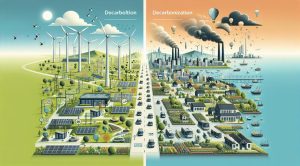


Eco Signals A Global Guide to Environmental Indicators and Trends
In a world where climate news can change daily the phrase Eco Signals has become a key concept for journalists analysts business leaders and citizens who want early insight into environmental change and its social and economic effects. Eco Signals are the observable indicators that point to emerging trends in the natural world in public opinion and in market behavior. Understanding Eco Signals helps newsrooms and global readers make sense of raw data policy shifts corporate actions and community movements. This article explains what Eco Signals are why they matter and how you can monitor and interpret them to make better decisions at every scale.
What Are Eco Signals and Why They Matter
Eco Signals are measurable or observable phenomena that reveal a change in environmental conditions or in human response to those conditions. They include physical sensors that record temperature air quality or biodiversity counts public data on energy use and waste corporate disclosures about emissions policies and citizen actions like protest levels or adoption of low impact products. Eco Signals matter because they provide early warning value and help prioritize attention and resources. For news sites and global audiences Eco Signals frame stories that link local events to global patterns making complex science accessible and actionable.
Types of Eco Signals to Watch
Eco Signals show up in many forms and each type offers unique insight. Physical Eco Signals come from sensors and natural records such as glacier retreat tree flowering dates and ocean acidity readings. Economic Eco Signals include changes in investment flows like growth in green funds or shifts in commodity prices tied to climate risk. Policy Eco Signals show up in new rules or treaty moves and in public budgets for conservation. Social Eco Signals are trends in consumer choice community action and online conversation. Corporate Eco Signals are disclosures and procurement choices that reveal how businesses respond to risk and opportunity. Combining types gives a fuller picture that helps avoid misreading a single signal.
How Media Outlets Use Eco Signals
News organizations translate raw Eco Signals into narratives that inform readers. A spike in air quality alerts in a major city becomes a story about health resilience and adaptation. An uptick in corporate emissions reporting becomes a business beat emphasis on accountability and supply chain risk. At ecoglobalo the editorial team tracks Eco Signals across regions and sectors to connect dots and surface patterns for a global audience. For readers looking for a central hub of timely reporting and analysis visit ecoglobalo.com to explore curated coverage that links signal to story.
Tools and Technologies for Monitoring Eco Signals
Advances in remote sensing open source data platforms and low cost sensor networks have transformed how Eco Signals are detected and verified. Satellite imagery gives early view of land use change and deforestation. Citizen science apps collect biodiversity observations from people on the ground. Publicly available data on traffic patterns energy consumption and industrial emissions can be aggregated to show pressure points. Machine learning helps identify anomalies that merit human review. Yet tools alone do not create insight. Careful framing context and transparent methodology are essential for reliable signal interpretation.
Interpreting Eco Signals with Care
Reading Eco Signals requires caution and context. Not every spike or dip tells a lasting story. Seasonal cycles reporting artifacts and single event extremes can be misleading if taken at face value. Analysts use comparative baselines trend analysis and cross validation with independent data sources. For example a single poor harvest may be local weather noise but repeated consecutive losses across regions could be a systemic signal of stress. Analysts also examine who is influencing the signal. A sudden rise in search interest for a term can be driven by a viral story not by an underlying shift. Combining quantitative data with qualitative reporting yields stronger conclusions.
Eco Signals for Business and Investment Strategy
Investors and corporate executives use Eco Signals to align portfolios and operations with risk and opportunity. Signals such as increasing regulatory action rising consumer demand for low impact products and supply chain disruptions due to extreme weather indicate where capital and strategy should flow. Companies that monitor Eco Signals can innovate faster develop resilient supply chains and avoid stranded assets. Sustainable practices become a source of competitive advantage when they match clear market demand. For professionals seeking multimedia resources and storytelling around these shifts consider platforms that pair narrative with data like the creative resource at Moviefil.com which helps communicate complex stories in visual form.
Policy Implications of Eco Signals
Policymakers can use Eco Signals to design responsive measures that protect communities and ecosystems. Early identification of water stress or habitat loss can trigger targeted investment in conservation and adaptation. Signals about social sentiment and political support help craft feasible policy packages. Transparent public dashboards that display Eco Signals build trust and allow citizens to track progress. Timely policy action guided by reliable signals reduces harm and leverages opportunities for green growth.
Community Action and Personal Choices Guided by Eco Signals
At the community level Eco Signals empower local action. Neighborhood air monitors school energy audits and local biodiversity counts translate global trends into concrete projects. For individuals Eco Signals can guide behavior change. Awareness of food supply risk might encourage more local procurement or support for regenerative farming. Understanding energy mix trends can influence home retrofits and transport choices. When communities share their local Eco Signals with journalists and researchers the combined data becomes more powerful and equitable.
Best Practices for Reporting on Eco Signals
Responsible reporting on Eco Signals follows clear practices. First verify signal accuracy using multiple independent sources. Second provide context so readers understand scale and uncertainty. Third make data sources and methodology available so claims can be tested. Fourth avoid alarmism by explaining what is known and what remains uncertain. Finally connect readers to credible resources and actions they can take. These practices build credibility and make Eco Signals useful rather than just alarming.
Real World Examples of Eco Signals in Action
Consider a city facing repeated heat events. Heat records rising energy demand and new hospital admissions create a composite Eco Signal that points to an urgent need for cooling infrastructure and public health planning. In another case rising sales of electric bicycles together with new bike lane policy and municipal subsidies form a clear Eco Signal that active transport is moving from niche to mainstream. These composite signals guide investment and policy and provide story angles for local and global media.
How To Start Tracking Eco Signals Today
Anyone can begin tracking Eco Signals with simple steps. Identify the outcomes you care about such as air quality urban heat or species abundance. Find public data sources and subscribe to official updates. Use social listening to monitor public conversation and local news to catch early events. Join or support citizen science projects that feed data into public platforms. Build a small dashboard that displays the key indicators and update it regularly. Share findings with your community and with trusted media outlets so signals are amplified responsibly.
Conclusion Eco Signals as Guides to a Changing World
Eco Signals are essential tools for understanding an era of rapid environmental change. They help link observation to action by guiding journalism investment and policy. By combining technology robust methods and community engagement Eco Signals become trustworthy indicators that empower better decisions. For global readers and news consumers looking for consistent coverage of these signals and their implications a central source that curates verified reporting can be invaluable. Explore broad coverage and timely analysis at our global hub and share stories that matter to your network.
Eco Signals will continue to shape how societies respond to environmental change. Learning to read them with care is a skill that benefits professionals and citizens alike. Start small track consistently and share responsibly and you will help turn signals into solutions.