

Renewable Storage The Key to a Clean Global Energy Future
Renewable Storage is the central technology that will allow societies around the world to shift from fossil fuels to clean energy sources while maintaining reliable electricity for industry homes and public services. As wind solar and other renewable generators expand their share of power production the ability to store energy when supply exceeds demand and release it when output falls becomes essential. This article explores the main Renewable Storage technologies the economic and policy drivers that shape adoption and practical steps communities and businesses can take to benefit from this energy transition.
Why Renewable Storage Matters
Intermittent renewable resources such as solar and wind do not always align with electricity demand. Solar produces most power during daylight hours while demand often peaks in the evening. Wind varies by weather patterns and location. Renewable Storage smooths these mismatches by saving surplus generation and dispatching it when needed. That capability enhances grid stability reduces the need for fossil fuel peaker plants and lowers system emissions.
Beyond stabilizing the grid Renewable Storage enables higher penetration of renewables which reduces overall system costs over time. Storage can defer expensive network upgrades by providing capacity at the right place and time. It can also support the electrification of transport and heating by ensuring clean energy is available for charging and thermal systems. In short Renewable Storage is a multiplier for the climate benefits of renewables.
Leading Renewable Storage Technologies
Multiple storage technologies are active in real world projects today. Each has unique strengths cost profiles and ideal applications. Understanding the technology mix is critical for planners and investors.
Battery Energy Storage Systems Lithium ion batteries have become the workhorse of modern storage projects. They offer fast dispatch high round trip efficiency and modular scalability. Battery systems can provide frequency regulation capacity support and short to medium duration load shifting. Emerging chemistries and manufacturing scale are driving costs down and improving lifetime performance.
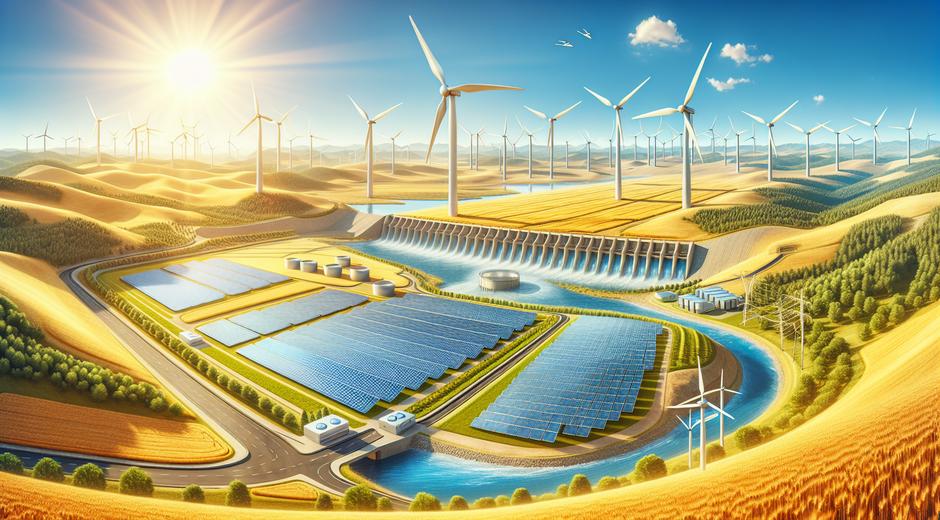
Pumped Hydropower Storage Pumped hydropower stores energy by moving water between reservoirs at different elevations. It is well proven operates at large scale and can deliver long duration storage. While site specific it remains the largest share of global capacity for year round storage in many regions.
Thermal Storage Thermal storage captures heat or cold for later use. Systems range from insulated tanks that store hot water for district heating to molten salt that stores concentrated solar thermal output for power generation after sunset. Thermal storage often pairs directly with end use systems enabling high efficiency end to end solutions.
Mechanical Storage Technologies such as compressed air energy storage and flywheels deliver specific system benefits. Compressed air can offer long duration storage in suitable geological settings while flywheels excel at providing rapid response for grid stability services.
Emerging Long Duration Storage Novel technologies that store energy for many hours to several days are gaining attention. These include chemical storage approaches such as hydrogen and synthetic fuels as well as advanced battery chemistries designed for longer cycles. Long duration storage is crucial for seasonal balancing and for systems with very high renewable shares.
Grid Integration and Market Design
Effective Renewable Storage deployment requires good grid integration and well designed market signals. Storage must be compensated for the multiple value streams it provides from energy arbitrage to capacity provision to ancillary services. Market structures that allow stacking of these revenue sources increase project viability and attract investment.
Grid operators must adapt planning and operational tools to incorporate distributed and utility scale storage. Forecasting tools that account for storage dispatch patterns combined with dynamic pricing and demand response programs yield improved system outcomes. Policymakers can accelerate adoption by setting clear interconnection rules and by creating markets for flexibility where storage can compete fairly with other resources.
Economic and Policy Drivers
Declining costs for batteries and supportive policy frameworks are the twin engines of storage growth. Incentives that reward clean energy integration and carbon reduction can shift investment toward storage. Procurement programs that include flexibility requirements help make long term planning more robust.
Financial innovation also matters. Aggregation platforms that allow many small scale batteries to participate in wholesale markets create new revenue streams for homeowners and businesses that invest in behind the meter storage. Public funding for demonstration projects reduces technology risk and accelerates learning that lowers future costs.
Business Models and Use Cases
Renewable Storage can be deployed in many settings each with different business models. Utilities use large scale storage to integrate grid connected wind and solar and to provide system capacity. Commercial and industrial consumers deploy storage to shave demand charges improve resilience and ensure continuous operations during outages. Residential customers often combine rooftop solar with batteries to increase self consumption and to gain backup power.
Microgrids that pair renewables storage and energy management systems are becoming practical for campuses island communities and critical infrastructure. These designs enhance local resilience and can reduce operating costs while supporting sustainability targets.
Environmental and Social Considerations
Scaling Renewable Storage must be managed to reduce environmental impacts and to ensure social benefits. Battery manufacturing requires attention to supply chains material sourcing and recycling. Policies that require producer responsibility and that support circular economy approaches help manage these challenges.
Community engagement is also important. Siting large projects such as pumped storage requires transparent planning to address ecological and social concerns. When done correctly storage projects can create local jobs reduce air pollution and provide reliable clean energy that benefits residents.
How Communities Businesses and Individuals Can Prepare
Action at every level will accelerate the benefits of Renewable Storage. National and regional planners should incorporate storage into resource planning and set targets that reflect system flexibility needs. Utilities should pilot new tariff structures and aggregation strategies that reward flexibility. Businesses can evaluate onsite storage paired with renewable generation to reduce energy costs and to strengthen operational resilience.
For individuals and families adopting storage becomes more appealing as costs fall. Homeowners can start with modest battery systems paired with rooftop solar to improve energy independence. Communities can host shared storage in community centers or social housing projects to spread benefits equitably and to lower barriers to access.
For readers who want a steady stream of global coverage on sustainability energy policy and technology innovation visit the site of our parent network at ecoglobalo.com to find local updates and in depth features across regions. For practical lifestyle tips that complement energy saving efforts check a trusted resource for family oriented guides at CoolParentingTips.com.
The Road Ahead
The global transition to renewables will depend heavily on cost effective and durable Renewable Storage solutions. Continued innovation in materials systems integration policy and market design will expand the role of storage from a niche resource to a backbone of the energy system. Collaboration among governments industry academics and communities will ensure that storage provides broad based benefits while addressing environmental and social challenges.
Investors and planners should view Renewable Storage not as an optional add on but as a central element of modern energy systems. With thoughtful policy and smart deployment strategies storage can accelerate decarbonization improve energy security and unlock new economic opportunities worldwide.
Conclusion
Renewable Storage is essential for a resilient and low carbon energy future. By enabling high levels of wind and solar power Reliable Storage technologies reduce emissions improve grid reliability and support a more flexible energy system. Stakeholders that act now to integrate storage into planning investment and everyday use will capture the greatest benefits for economies communities and the planet.