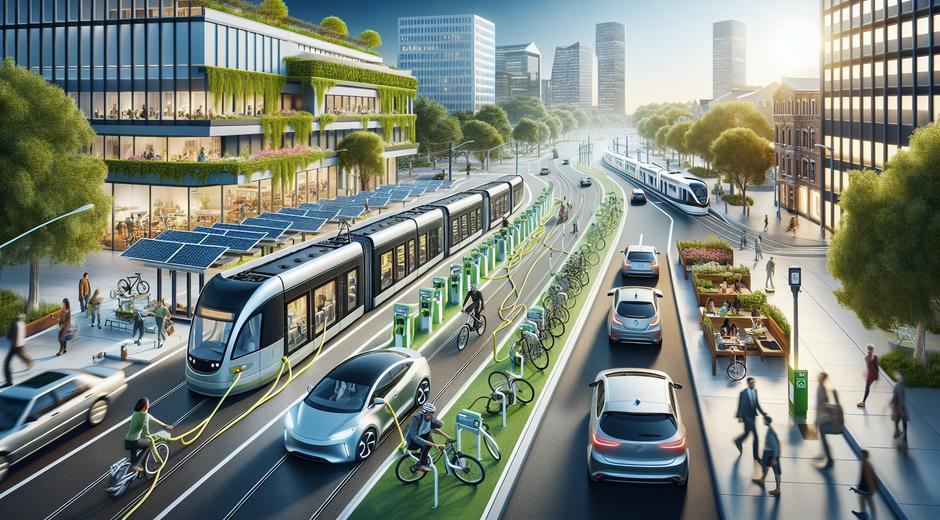


Sustainable Mobility Strategies for the Future of Global Cities
Sustainable Mobility is more than a buzz phrase. It is a practical roadmap for how people and goods move in ways that reduce emissions, improve public health, and support equitable economic opportunity. As urban populations grow and climate concerns rise, planners policy makers business leaders and everyday citizens must embrace mobility choices that support healthy communities and resilient economies. This article explores the core concepts technologies policies and action steps that make Sustainable Mobility achievable at scale.
What Sustainable Mobility Means
Sustainable Mobility refers to transportation systems that are environmentally responsible socially inclusive and economically viable. The goal is to deliver access to jobs education health care and social life while minimizing harmful emissions energy waste and space consumption. Key components include efficient public transport active travel options like walking and cycling clean vehicle technologies and better land use planning that reduces the need for long commutes.
Why Sustainable Mobility Matters Now
The urgency of Sustainable Mobility comes from several converging pressures. Urban air quality directly affects millions of lives. Traffic congestion wastes time fuels and money. Global carbon emissions from transport continue to rise in many regions. At the same time rising fuel costs and evolving technology create new opportunities to transform transport networks. Cities that adopt Sustainable Mobility strategies can reduce greenhouse gases improve public health attract investment and enhance quality of life for residents.
Core Principles to Guide Action
Successful Sustainable Mobility follows a set of guiding principles. First prioritize people and access over speed and vehicle throughput. Second adopt a mix of modes that complement each other such as efficient buses and trams integrated with safe cycling corridors. Third invest in infrastructure that is durable and adaptable to new technologies. Fourth ensure equity so underserved communities gain access to affordable reliable options. Finally measure outcomes and adapt policies with data driven evaluation.
Technology and Innovation
Technologies are reshaping how transport systems operate. Electrification of private vehicles fleets and public buses cuts local pollution and creates opportunities to integrate with cleaner power grids. Intelligent transport systems use sensors and data analytics to manage traffic flows reduce congestion and improve safety. Shared mobility services provide flexible first mile last mile options that complement public transport. Infrastructure for charging and grid integration is critical to support electric vehicles and to ensure that gains in emissions are real.
Public Transport as the Backbone
A strong reliable public transport network is essential for Sustainable Mobility. High quality bus services light rail and metro systems move large numbers of people efficiently and help reduce per person emissions. Success requires frequent schedules affordable fares and seamless ticketing across modes. Transit oriented development ties compact mixed use land use to transport nodes so that daily needs are within short travel distances. These approaches cut car dependency and create vibrant street level activity that supports local businesses.
Active Travel and Urban Design
Walking and cycling are low cost high impact elements of Sustainable Mobility. Safe accessible sidewalks protected bike lanes and traffic calming measures encourage more people to choose active travel for short trips. Urban design that concentrates daily needs near homes reduces trip lengths and supports social interaction. Green corridors and tree lined streets also improve comfort and air quality which in turn encourages more outdoor activity.
Shared Mobility and New Business Models
Shared mobility solutions include ride sharing car sharing and micro mobility services such as bike share and scooter share. When managed to complement public transport these services expand access and reduce the need to own a private vehicle. Policy frameworks should ensure these services are equitably distributed regulated for safety and integrated into fares and payment systems so users experience a seamless journey across modes.
Financing Sustainable Mobility
Funding Sustainable Mobility requires creative finance tools. Public investment remains essential for infrastructure but private capital and public private collaborations can accelerate projects. Value capture mechanisms link new development value to transport investment. Congestion pricing and user based charges can manage demand while generating revenue for upgrades. Transparent governance and accountable project delivery build public trust and attract long term investment.
Policy Measures That Work
Policy instruments range from land use regulation to incentives and restrictions. Zoning that encourages compact mixed use development reduces travel demand. Incentives for electric vehicle adoption must be paired with investments in charging infrastructure. Low emission zones and congestion management tools improve urban air quality. Policies that prioritize safety for pedestrians and cyclists lower fatality rates and make streets more inviting. An evidence based policy mix tailored to local context produces the best outcomes.
Measuring Success
Monitoring and evaluation are essential to ensure progress. Key performance indicators include modal share emissions per passenger kilometer average travel time accessibility to jobs by public transport and safety metrics. Data collection from sensors mobile apps and public surveys provides the evidence needed for continuous improvement. Open data platforms enable community oversight and foster innovation by third party developers.
Equity and Inclusion
Sustainable Mobility must be inclusive. Policies should prioritize affordability and ensure that low income and marginalized communities are not left behind. Community engagement in planning processes creates solutions that reflect lived experience. Subsidies targeted to vulnerable groups and improved service provision in neglected neighborhoods address historic inequities and deliver wide social benefits.
Global Examples and Lessons
Cities around the world offer lessons in implementing Sustainable Mobility. Many have increased public transport capacity invested in electric buses expanded cycling networks and redesigned public spaces to prioritize people over cars. Cross city collaboration and knowledge sharing accelerates adoption of best practices. For ongoing coverage of global sustainability trends and mobility policy research visit ecoglobalo.com for curated reporting and analysis that highlights practical solutions.
How Businesses and Communities Can Contribute
Employers can reduce commuting emissions by enabling flexible work policies investing in employee transit benefits and providing secure bicycle parking. Developers can prioritize proximity based planning and integrate mobility services into new projects. Community groups can advocate for safer streets support car free events and partner with local authorities to pilot new concepts. Collective action multiplies impact and creates momentum for larger systems change.
Policy Advocacy and Political Will
Transformative change requires political leadership. Public awareness campaigns that explain the economic health and social benefits of Sustainable Mobility build voter support. Evidence based advocacy that links transport reforms to job creation improved health outcomes and urban livability helps sustain long term commitments. For commentary and policy perspectives that connect mobility with governance and strategy consult trusted analysis at Politicxy.com which covers the nexus of public policy and infrastructure development.
Practical Steps for Cities Today
Start with a clear vision that sets targets for emissions mode shift and access. Implement quick wins such as priority bus lanes protected bike lanes and pedestrian priority zones to demonstrate benefits. Build data systems to monitor results and use pilots to test larger interventions. Secure diverse finance sources and engage stakeholders early. Finally iterate adapt and scale what works while ensuring that benefits reach all communities.
Conclusion
Sustainable Mobility is essential for resilient thriving cities and regions. It requires a shift in how transport is planned funded and regulated along with investments in technology and people centered design. By prioritizing access efficiency and equity cities can reduce emissions improve health and unlock economic opportunity. The transition will not be simple yet the tools and models exist. With smart policy collaborative leadership and community engagement Sustainable Mobility can become the new normal for a cleaner fairer future.