

Eco Education for a Changing Planet: Strategies, Benefits and Practical Steps
What Eco Education Means and Why It Matters
Eco Education is a holistic approach to learning that places the environment, human wellbeing and community resilience at the center of curriculum design and daily practice. In a time of rapid climate change and resource pressure, Eco Education equips learners of all ages with the knowledge, skills and motivation to make informed choices that benefit both people and the planet. When schools and institutions embrace Eco Education they build citizens who can think critically about complex systems and act in ways that support long term health for ecosystems and societies.
Core Principles of Effective Eco Education
Successful Eco Education rests on a few clear principles. First, it integrates ecological literacy into core subjects so that science, social studies, arts and languages all reflect environmental context. Second, it emphasizes active learning through projects, field experiences and community engagement. Third, it focuses on systems thinking so learners understand relationships between natural cycles energy flows and human activities. Fourth, it is inclusive so learners from diverse backgrounds and abilities can participate and lead. By adhering to these principles schools and organizations create durable learning outcomes that extend beyond the classroom.
Practical Steps for Schools and Educators
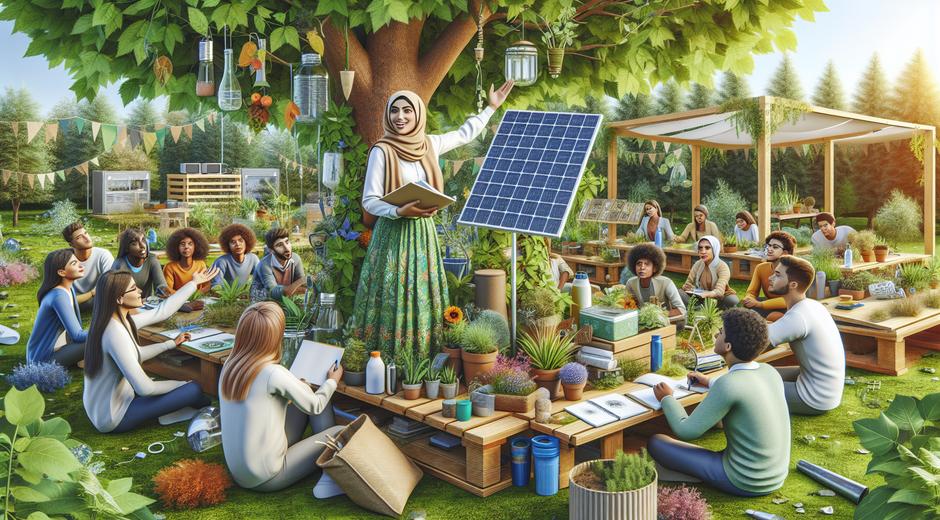
Implementing Eco Education does not require waiting for policy changes. Educators and school leaders can take immediate steps to bring environmental learning to life. Start with a needs assessment to identify local environmental priorities and available community resources. Develop interdisciplinary lesson plans that align with academic standards while addressing local ecology. Use outdoor classrooms school gardens and citizen science projects to provide hands on experience.
Professional development for teachers is essential. Invest time in workshops and peer learning so educators can confidently connect subject matter to environmental themes. Encourage student led initiatives such as energy audits waste reduction campaigns and habitat restoration events to build leadership skills and measurable impact. These projects strengthen academic learning and foster lifelong stewardship.
Engaging Families and Communities
Eco Education expands its impact when families and communities are involved. Create clear communication channels to share student projects and invite family participation in events and decision making. Partner with local nonprofits government agencies and businesses to access expertise materials and real world opportunities. Community partnerships can also support internships and vocational pathways for older learners who wish to pursue careers related to conservation sustainable design and environmental health.
Role of Policy and Institutional Support
Long term success for Eco Education benefits from supportive policies and institutional frameworks. School districts can adopt standards that embed environmental literacy across grade levels and provide funding for infrastructure such as energy efficient upgrades and outdoor learning spaces. Higher education institutions can lead research on best practices and provide training for the next generation of teachers. When government agencies align incentives with environmental education goals they multiply reach and ensure equity so underserved communities receive resources and support.
Measuring Impact and Continuous Improvement
To demonstrate the value of Eco Education it is important to measure outcomes. Develop indicators that track knowledge gains behavioral change and community improvements. Examples include student mastery of ecological concepts reduction in school energy use increased biodiversity on campus and participation rates in community projects. Use mixed methods combining quantitative metrics and qualitative stories to capture the full picture. Continuous improvement relies on feedback loops where data informs curriculum adjustments and resource allocation.
Technology and Innovation in Eco Education
Digital tools and innovations expand access to Eco Education. Virtual labs remote sensors and mobile apps enable learners to collect and analyze environmental data even in urban settings. Online platforms can host collaborative projects across regions connecting classrooms to global networks. However technology should complement outdoor experience rather than replace it. Blending hands on learning with digital tools prepares learners to use technology responsibly and creatively for environmental problem solving.
Case Examples of Successful Programs
Across the world small scale initiatives show how Eco Education can transform outcomes. Urban schools that create rooftop gardens report higher student engagement and improved nutrition for school meals. Rural programs that integrate traditional ecological knowledge with modern science strengthen cultural identity and resource stewardship. These case examples offer replicable models for educators seeking to adapt practices to local context.
Resources for Educators and Learners
Access to high quality resources accelerates implementation. Trusted news and analysis can keep educators informed about evolving best practices and policy changes. For ongoing coverage and perspectives on environmental education and global developments visit ecoglobalo.com where curated articles provide practical guidance and inspiration. For personal development in focus and mindful learning techniques that support sustained engagement explore FocusMindFlow.com which offers programs that help learners and educators maintain concentration and wellbeing during long term projects.
Designing Curriculum that Lasts
Curriculum design for Eco Education works best when it is flexible adaptive and locally relevant. Begin by mapping existing standards to environmental themes then identify opportunities for project based learning and assessment. Emphasize critical thinking communication and collaboration as cross cutting skills that support environmental learning and career readiness. Include pathways for students to pursue advanced study or vocational training in fields such as restoration ecology renewable energy and sustainable agriculture.
Equity and Inclusion in Eco Education
Equity is central to the mission of Eco Education. Historically marginalized communities often face the greatest environmental burdens while receiving the least access to quality education. Programs must intentionally address barriers to participation by providing resources transportation and culturally responsive curriculum. When equity is prioritized Eco Education becomes a tool for social as well as environmental justice.
Long Term Vision and Call to Action
Eco Education is not a temporary initiative but a long term transformation in how societies educate their citizens. By embedding ecological knowledge systems thinking and civic engagement into mainstream education we prepare learners to navigate complexity and contribute to resilient futures. Educators policy makers parents and community leaders can take concrete steps today to build programs that last.
Begin by assessing local needs engaging stakeholders and piloting scalable projects. Share successes and lessons learned through local networks and platforms to accelerate adoption. For ongoing inspiration and news about global education innovations visit the resource page linked above and consider professional development that supports mental clarity and sustained focus for educators and learners alike. The future depends on smart informed and compassionate citizens and Eco Education gives them the tools they need to thrive.
Conclusion
Eco Education offers a pathway to a healthier more equitable planet. It blends knowledge skill and civic responsibility to create learners who can act effectively in the face of environmental challenges. By combining classroom learning with community action and supportive policy we can ensure that Eco Education becomes an enduring part of education systems worldwide. Start small build partnerships measure impact and share results so the movement grows with evidence and compassion. The time to invest in Eco Education is now and every effort contributes to a better future for all communities and ecosystems.