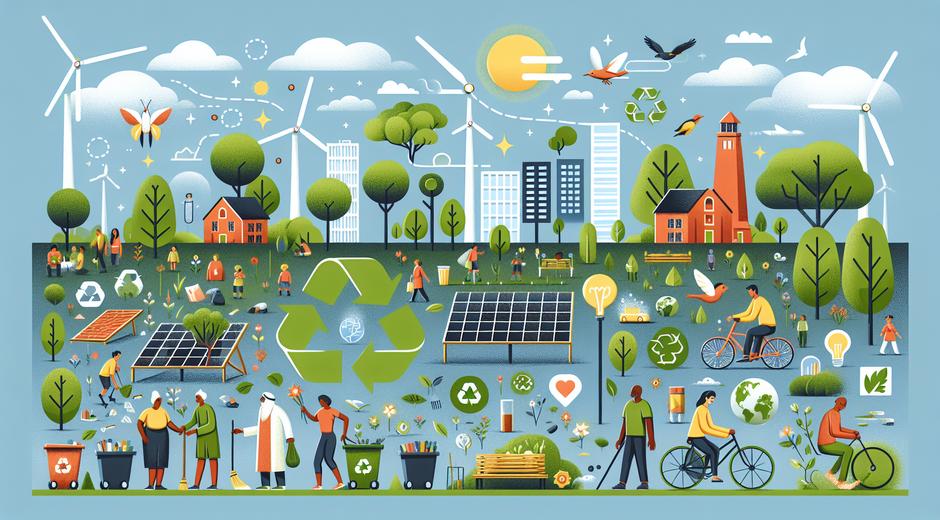


Eco Footprint A Global Measure of Impact and Hope
The term Eco Footprint captures a powerful idea that is shaping how cities nations businesses and individuals plan for a sustainable future. At its core Eco Footprint measures how much biologically productive land and water area a population requires to produce the resources it consumes and to absorb its wastes using prevailing technology. Understanding Eco Footprint offers a clear metric to compare consumption patterns to the planet capacity to regenerate resources and to guide practical steps toward balance.
Why the Eco Footprint Matters for Policy and Practice
Policymakers and planners use Eco Footprint as a decision making tool to align economic ambitions with ecological limits. When a nation has an Eco Footprint larger than its biocapacity it faces resource pressure that can lead to food insecurity water stress and biodiversity loss. Tracking Eco Footprint across sectors reveals where interventions will yield the biggest returns. For example sustainable agriculture afforestation and clean energy transition can reduce the footprint by decreasing demand for new land and by lowering carbon emissions that require absorption by ecosystems.
Communities can use footprint data to set targets for reduced consumption promote circular practices and incentivize low impact technology. Corporations find value in footprint analysis when they design products that require fewer raw materials consume less energy and produce less waste throughout their lifecycle. Investors are increasingly asking for footprint disclosures as part of environmental social and governance assessments making footprint aware companies more attractive for long term capital.
How Eco Footprint Is Calculated
Eco Footprint calculations convert diverse flows such as energy use food consumption and forest products into a common unit of biologically productive area. The calculation typically includes categories like cropland grazing land fishing grounds built up land forest products and carbon demand on land. The result is expressed in global hectares per person or for an entire population. This common unit lets analysts compare the impact of a lifestyle or an economy to the available global capacity.
Although methods continue to evolve the strength of the Eco Footprint lies in its simplicity and communicative power. It transforms abstract resource use into a spatial metric that people can visualize. Debates about methodology are healthy and help improve accuracy. Nevertheless the core message remains clear: many societies use more regenerative capacity than the planet can sustainably provide.
Reducing Your Personal Eco Footprint
Individuals can take concrete steps to reduce their Eco Footprint by focusing on consumption choices that lower demand for land energy and raw materials. Dietary shifts toward more plant based foods use less land and water than diets high in animal products. Reducing food waste and choosing local seasonal produce also cut the footprint associated with food systems.
Transport choices matter as well. Walking cycling and using public transport reduce per person emissions and relieve pressure on urban land. When private vehicle use is necessary choosing fuel efficient or electric models and improving trip planning help lower the footprint. Home energy efficiency improvements such as insulation efficient appliances and renewable energy installations reduce energy demand and associated carbon burden on ecosystems.
Product lifecycles add up. Selecting durable repairable products shared ownership models and recycling reduce the need for new resource extraction. Small lifestyle changes aggregated across millions of people can yield significant reductions in global footprint totals.
Business Strategies to Shrink Corporate Eco Footprint
Businesses wanting to lead on sustainability must integrate footprint thinking into operations supply chain and design. Eco footprint assessment informs product redesign by highlighting the stages with highest land and carbon intensity. Companies can then prioritize material substitution low impact packaging and closed loop manufacturing. Procurement policies that favor sustainably produced raw materials and suppliers with transparent footprint data help create resilient supply chains.
Energy transition is central. Shifting to renewable power for manufacturing logistics and office operations cuts the carbon component of the footprint. Investing in natural capital restoration or community based conservation projects can offset unavoidable impacts while delivering social benefits. Communication matters too. Clear footprint reporting builds trust with customers regulators and investors while creating incentives for continuous improvement.
City Planning and the Urban Eco Footprint
Urban areas are hotspots for footprint reduction because dense settlement patterns can be highly efficient if designed with sustainability in mind. Compact city design reduces land consumption and shortens travel distances enabling public transport walking and cycling. Green infrastructure such as urban forests green roofs and permeable surfaces enhances local biocapacity and provides multiple benefits including heat mitigation and storm water management.
Cities can implement policies that prioritize mixed use development affordable housing near jobs and investment in transit systems to decrease per capita footprint. Waste management reforms that emphasize reuse composting and recycling reduce the land and resource needs of urban consumption. By measuring and publicly reporting urban Eco Footprint cities can benchmark progress and share successful strategies with peers globally.
Measuring Progress at National and Global Scales
At national levels Eco Footprint data reveals dependencies on foreign land and resources and highlights opportunities for resilience building. Countries with large export oriented agricultural sectors may appear to have low domestic footprint while consuming large global biocapacity overseas. This insight encourages international cooperation on sustainable trade and supply chain transparency.
Globally the aggregate Eco Footprint helps assess whether humanity is living within planetary limits. Recent assessments show a gap between global demand and ecological supply indicating a need for collective action on renewable energy land use policy and consumption norms. Progress can be tracked by monitoring per capita footprints the size of ecological deficits and the rate at which biocapacity is restored through conservation and sustainable management.
Resources to Learn More About Eco Footprint
For readers seeking practical tools and data to explore their own footprint reputable websites offer calculators and educational materials. These resources help translate national scale concepts into personal goals and community initiatives. For broader cultural context and timely features on sustainability and culture consider visiting trusted partners for curated content and project ideas like Museatime.com where cultural institutions and sustainability themes intersect.
If you want to follow global news trends tips and in depth analysis on sustainability topics including Eco Footprint across regions you can stay connected with media outlets focused on the environment and global policy. Our own platform keeps readers up to date with developments research and stories that matter at ecoglobalo.com. We publish actionable guidance case studies and interviews that help translate footprint insights into real world outcomes.
Looking Ahead Practical Steps for a Balanced Future
Reducing the global Eco Footprint while improving human wellbeing requires integrated strategies across technology governance and culture. Policy instruments such as carbon pricing land use zoning and incentives for circular economy business models align markets with ecological goals. Investments in education and community led conservation strengthen social buy in and local capacity.
Innovation will play a role but behavioral change and equitable resource sharing are equally vital. Developed and developing regions must cooperate on technology transfer sustainable finance and fair trade to ensure that footprint reduction does not come at the cost of development opportunities. The path to a balanced future rests on combining measurement with meaningful commitments and scalable solutions.
Conclusion Eco Footprint as a Compass for Action
Eco Footprint offers a clear accessible metric for understanding human impacts on the planet. By measuring demand in terms of productive area it creates a common language for policymakers businesses communities and individuals to discuss sustainability. Applying footprint thinking helps target high impact interventions from food systems to energy to urban planning.
Every reduction in Eco Footprint contributes to a safer more resilient planet. With data policy and public engagement working together we can build economies that thrive within ecological limits. Explore the tools learn from success stories and take steps today to lower your footprint and support systems that restore the Earth capacity for future generations.